Acupuncture in South Miami, Florida
Acupuncture provided by Rafael Padro, DOM, AP — a Florida-licensed Doctor of Oriental Medicine and Acupuncture Physician — at our South Miami clinic. Whether acupuncture is appropriate for you is determined through an individualized evaluation.
Planning Your First Visit
Acupuncture appointments take place in person at our South Miami office with Rafael Padro, DOM, AP.
Coverage varies by clinician, service and plan. Contact our office to ask about coverage and appointment availability.
What Is Acupuncture & How Does It Work?
Acupuncture is a cornerstone of Traditional Chinese Medicine (TCM) that has been practiced for over 3,000 years. It involves the insertion of ultra-fine, sterile needles at specific points on the body to stimulate healing, reduce pain, and restore balance. At Mind & Soul Therapy & Acupuncture in South Miami, our licensed acupuncture physician Rafael Padro, DOM, AP practices it alongside a modern clinical understanding. Whether acupuncture is appropriate for a particular concern is determined through an individualized evaluation.
According to TCM theory, the body contains a vital energy called Qi (pronounced "chee") that flows through a network of channels called meridians. When Qi flows freely, the body is healthy and balanced. When this flow becomes blocked or disrupted — due to stress, injury, poor diet, or emotional turmoil — pain and illness result. Acupuncture is understood in TCM to restore the smooth flow of Qi by stimulating specific acupuncture points along these meridians.
How Researchers Think Acupuncture Works
Researchers have studied how the body responds when acupuncture needles are inserted. Proposed mechanisms include:
- Endorphin release: Acupuncture triggers the release of endorphins and enkephalins — the body's natural pain-relieving chemicals — which may help explain why acupuncture is often used for pain-related concerns.
- Reduced inflammation: Some studies suggest acupuncture may influence inflammatory markers such as CRP and IL-6; research in conditions like arthritis and fibromyalgia is ongoing.
- Improved circulation: Needle stimulation increases blood flow to targeted areas, delivering oxygen and nutrients while removing metabolic waste.
- Nervous system regulation: Acupuncture shifts the body from sympathetic ("fight or flight") to parasympathetic ("rest and digest") mode, which may be relevant to stress-related concerns.
- Neurotransmitter balancing: Some research suggests acupuncture may influence serotonin, dopamine, and GABA levels — key neurotransmitters involved in mood, sleep, and pain perception.
Acupuncture has been studied for a variety of pain and other health conditions, with evidence varying depending on the condition being treated. With growing research and clinical evidence, acupuncture has become one of the most widely practiced complementary therapies in the world.
Concerns Evaluated with Acupuncture
Patients visit our South Miami clinic to discuss a range of physical, mental, and emotional concerns. Whether acupuncture is appropriate for a particular concern is determined through an individualized evaluation with Rafael Padro, DOM, AP.
This list reflects concerns patients commonly bring to the practice; it is not a guarantee of treatment or outcome, and suitability is assessed at your first visit.
Potential Benefits of Acupuncture
Acupuncture is explored for a range of concerns. The points below reflect how it is commonly used and what research suggests, with the strength of evidence varying by condition.
A Non-Surgical Option
Acupuncture is a non-surgical, non-injection option some patients explore for pain-related concerns. It is generally well tolerated when performed by a licensed practitioner.
May Influence Inflammation
Some studies suggest acupuncture may influence inflammatory markers. Research in specific conditions such as arthritis is ongoing, and evidence varies.
Calms the Nervous System
Acupuncture may help shift the body from sympathetic 'fight or flight' toward parasympathetic 'rest and digest' mode, which may support relaxation and stress regulation.
Supports Circulation
Needle stimulation increases local blood flow to targeted areas. In Traditional Chinese Medicine, this is described in terms of promoting the flow of Qi.
Hormonal Health Research
Acupuncture's influence on the hormonal system, including the HPA axis, is an active research area. Any hormonal care follows an individualized evaluation.
Sleep Support
Some research suggests acupuncture may support sleep quality. Findings vary by study, and a plan is developed at your evaluation.
Complements Conventional Medicine
Acupuncture may complement an existing medical treatment plan. It's not either/or; it's integrative. Patients should continue prescribed treatments unless their clinician advises otherwise.
Minimal Side Effects
Acupuncture is generally well tolerated when performed by a qualified licensed practitioner. The most commonly reported response is deep relaxation.
Considers the Whole Person
Acupuncture can be incorporated into a broader whole-person treatment plan that considers symptoms, lifestyle, and overall well-being.
Individualized Planning
Treatment recommendations — including whether acupuncture is appropriate for you — follow an individualized evaluation rather than a one-size-fits-all protocol.
Acupuncture & Pain Symptom Self-Assessment
Check any conditions you've been experiencing. Share your results with our team at your first visit.
This self-assessment is for educational purposes only and is not a medical diagnosis. Please consult with a qualified healthcare provider for proper evaluation and treatment.
Acupuncture for Pain Relief
Pain-related concerns are among the most common reasons people seek acupuncture. Dr. Rafael Padro creates personalized treatment plans based on your specific pain condition, medical history, and healing goals. Acupuncture is also a core part of our clinic's broader integrative pain management program, so your care can be coordinated with our other therapies when that makes sense for you.
Acupuncture for Back Pain
Back pain is one of the most common reasons people seek acupuncture in Miami. Research suggests acupuncture may provide benefit for some people with chronic lower back pain. Whether you're dealing with a herniated disc, sciatica, muscle spasms, or degenerative disc disease, acupuncture may help reduce inflammation, relax tense muscles, and support the body's natural pain-relief responses. Dr. Rafael Padro targets specific meridians along the bladder and gallbladder channels that govern the back and spine as part of a personalized treatment plan.
Acupuncture for Neck Pain & Stiffness
Neck pain from poor posture, whiplash, or muscle tension is a common reason people seek acupuncture. Some patients explore acupuncture for neck stiffness and related tension. By targeting points along the governing vessel and small intestine meridians, Dr. Rafael Padro addresses neck and upper-back tension as part of a personalized treatment plan. Whether acupuncture is appropriate for your neck symptoms, and what a course of care may look like, is determined through an individualized evaluation.
Acupuncture for Migraines & Headaches
If you suffer from migraines or chronic tension headaches, acupuncture may be an option worth considering. Research, including systematic reviews, has found that acupuncture may help reduce migraine frequency for some patients. Proposed mechanisms include changes in blood vessel regulation, inflammation, and serotonin activity. For tension headaches, we focus on gallbladder and bladder meridian points that release neck and scalp tension. Many patients who haven't responded to medication explore acupuncture as a complementary option.
Acupuncture for Sciatica
Sciatica — the sharp, radiating pain that travels from the lower back down through the leg — can be debilitating. Acupuncture is a non-surgical treatment option that may be considered for some patients with sciatica. By stimulating points along the bladder and gallbladder meridians (which trace the sciatic nerve pathway), acupuncture may be used to address muscle tension and symptoms along that pathway. Whether it is appropriate for your sciatica is determined through an individualized evaluation.
Acupuncture for Knee Pain & Osteoarthritis
Knee pain from osteoarthritis, meniscus injuries, or patellofemoral syndrome is a frequent reason patients visit our South Miami clinic. Acupuncture may be considered as part of a non-surgical approach to knee pain and osteoarthritis symptoms. Treatment may target stomach and spleen meridian points around the knee joint as part of a broader knee-care plan developed at your evaluation.
Acupuncture for Shoulder Pain & Frozen Shoulder
Frozen shoulder (adhesive capsulitis), rotator cuff strains, and general shoulder stiffness can severely limit daily activities. Some patients seek acupuncture for shoulder stiffness and restricted mobility. Treatment may focus on large intestine and triple burner meridian points that govern the shoulder girdle, with any accompanying guidance determined at your evaluation.
Acupuncture for Joint Pain & Arthritis
Osteoarthritis, rheumatoid arthritis, and general joint wear-and-tear are among the concerns patients bring to our clinic. Some studies have explored acupuncture for arthritis-related pain and stiffness. Acupuncture may be incorporated alongside your existing medical care; patients should continue prescribed treatments unless their clinician advises otherwise.
Acupuncture for Nerve Pain & Neuropathy
Peripheral neuropathy, trigeminal neuralgia, and pinched nerves can cause burning, tingling, and numbness. Early research has explored whether acupuncture may influence nerve-related symptoms, and evidence in this area is still developing. Suitability is assessed at your evaluation.
Acupuncture for Carpal Tunnel Syndrome
Carpal tunnel syndrome can cause wrist pain, hand numbness, and weakness. Some patients explore acupuncture before considering other interventions. Treatment may target the pericardium and lung meridians that pass through the wrist as part of a personalized plan. Whether acupuncture is appropriate for your symptoms is determined through an individualized evaluation.
Don't see your specific pain condition listed? Contact us or call 305-456-1014 to discuss whether acupuncture may be appropriate for you.
Acupuncture for Mental Health & Emotional Wellness
As a holistic mental health clinic, Mind & Soul Therapy is uniquely positioned to offer acupuncture as part of an integrated approach to emotional wellness. Acupuncture may be used as a complementary approach to support stress regulation, sleep, and emotional well-being as part of an individualized treatment plan.
Acupuncture for Anxiety
Anxiety affects millions of Americans, and many are interested in complementary approaches to support their care. Acupuncture is sometimes used as a complementary option for anxiety symptoms. Research suggests acupuncture may help by activating the parasympathetic nervous system, lowering cortisol (the stress hormone), and supporting calming neurotransmitters such as GABA and serotonin. Some studies have reported reductions in anxiety measures for patients receiving acupuncture. At our South Miami clinic, Dr. Rafael Padro targets points along the heart, pericardium, and kidney meridians — the TCM channels associated with emotional regulation. Acupuncture is not a substitute for psychiatric or psychological care, but it may be incorporated into an individualized plan. Session frequency and course length are determined through an individualized evaluation.
Acupuncture for Depression
Depression is increasingly understood as a whole-body condition — not just a chemical imbalance in the brain. Acupuncture may be considered as a complementary approach that supports overall well-being, alongside appropriate psychiatric and/or psychotherapeutic care. Acupuncture is sometimes used to help regulate neurotransmitter levels, reduce systemic inflammation (which research links to depression), improve sleep quality, and support energy levels. At Mind & Soul Therapy, we take an integrative approach — acupuncture may work alongside our psychiatric and counseling services as part of a comprehensive plan that addresses depression at the biological, emotional, and lifestyle levels. Acupuncture is not a replacement for prescribed depression treatment.
Acupuncture for Stress Management
Chronic stress is at the root of countless health problems — from high blood pressure and digestive issues to insomnia and weakened immunity. Acupuncture may help shift the body out of the 'fight or flight' sympathetic state and toward the 'rest and digest' parasympathetic state. Some patients use acupuncture as part of their broader stress-management routine. Whether and how it fits your situation is discussed at your evaluation.
Acupuncture for Insomnia & Sleep Disorders
If you struggle with falling asleep, staying asleep, or waking unrefreshed, acupuncture can help restore healthy sleep architecture. Some studies suggest acupuncture may support sleep quality, though findings vary. Treatment targets the heart and kidney meridians (which in TCM govern the spirit and willpower), along with points that calm the mind and relax the body. Acupuncture is not a replacement for medical care for sleep disorders, and any changes to prescribed sleep medication should be discussed with your prescribing clinician. A realistic plan and timeline are established at your first visit.
Acupuncture for Women's Health, Fertility & More
Acupuncture has been used for centuries to support women's reproductive health, hormonal balance, and overall wellness. Today, acupuncture is studied for a range of concerns, and the strength of evidence varies by condition.
Acupuncture for Fertility
Acupuncture is sometimes used as a complementary therapy during fertility treatment and IVF to support overall well-being and treatment-related stress. Acupuncture may also be incorporated into a broader plan that supports the menstrual cycle, ovarian blood flow, reproductive hormone balance (FSH, LH, estrogen), stress, and endometrial thickness. Dr. Rafael Padro creates individualized fertility acupuncture protocols based on your cycle, hormone panels, and reproductive history. Whether you're trying naturally, preparing for IVF, or navigating unexplained infertility, acupuncture may be used as a complementary, supportive approach. It is not a substitute for fertility medical care.
Acupuncture for PCOS & Menstrual Health
Polycystic Ovary Syndrome (PCOS) is a common cause of irregular periods, and some patients with PCOS explore acupuncture as a complementary option. Some studies have explored acupuncture for menstrual cycle regularity and related metabolic factors, with evidence still developing. Treatment may target the spleen, kidney, and liver meridians that TCM associates with reproductive and metabolic function. Acupuncture is not a substitute for medical care for PCOS.
Acupuncture for Hormonal Balance & Menopause
From PMS and perimenopause to full menopause, hormonal fluctuations can cause hot flashes, night sweats, mood swings, fatigue, and weight gain. Some studies suggest acupuncture may help reduce hot-flash symptoms for some patients, and acupuncture may also support sleep and mood during menopause. By stimulating the endocrine system through specific meridian points, acupuncture may support the body's natural balance of estrogen, progesterone, and cortisol. Many women in South Miami use acupuncture as a complementary tool for navigating perimenopause and menopause.
Acupuncture for Weight Loss Support
Some patients include acupuncture, including ear (auricular) acupuncture, as part of a broader weight-management plan. Research in this area is limited and mixed, and acupuncture is not a stand-alone weight-loss treatment. Any related plan is developed through an individualized evaluation alongside your other care.
Acupuncture for Allergies & Sinus Congestion
South Florida's year-round allergy season can be miserable. Acupuncture may be used as a complementary approach for some patients experiencing seasonal allergy symptoms. Treatment may help reduce histamine release, decrease sinus inflammation, regulate immune overactivity, and improve lymphatic drainage. The large intestine and lung meridians — which in TCM govern the respiratory system — are the primary focus. Patients should continue any prescribed allergy medications unless their clinician advises otherwise. For Miami's pollen-heavy spring and fall seasons, some patients begin treatments before allergy season peaks.
Acupuncture for Digestive Health
Digestive concerns such as IBS, reflux, bloating, and constipation are among the reasons patients seek acupuncture. The enteric nervous system — often called the 'second brain' — is deeply connected to the central nervous system, which is why stress so often triggers digestive symptoms. Proposed mechanisms involve gut motility and the stress response, since stress often triggers or worsens digestive symptoms. Treatment focuses on the stomach and spleen meridians (which govern digestion in TCM). Some clinical trials have explored acupuncture for IBS symptoms, with results varying. For patients with chronic digestive concerns, care is coordinated with your broader treatment plan when appropriate.
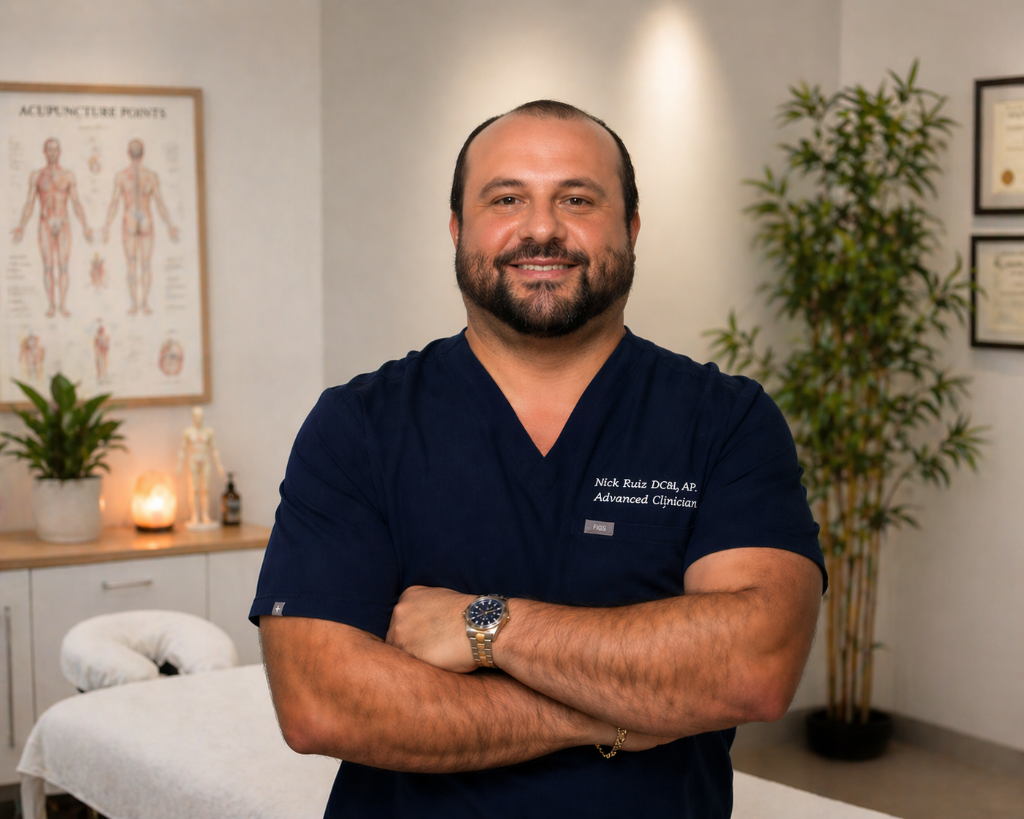
Rafael Padro, DOM, AP
Doctor of Oriental Medicine & Acupuncture Physician
Rafael Padro is a licensed Doctor of Oriental Medicine (DOM) and Acupuncture Physician (AP) serving patients in South Miami and throughout Miami-Dade County. With years of clinical experience in Traditional Chinese Medicine, he has worked with patients seeking acupuncture and integrative care for chronic pain, anxiety, infertility, hormonal imbalances, and a wide range of other health conditions.
Dr. Padro takes a truly holistic approach — combining classical acupuncture techniques with modern clinical understanding, Neuro Emotional Technique (NET), cupping therapy, and herbal medicine. He works closely with the psychiatric and therapy teams at Mind & Soul to provide integrated care that addresses the whole person: body, mind, and spirit.
Licensed Acupuncture Physician (AP)
State of Florida
NET Certified
Neuro Emotional Technique
Integrative Care
Holistic & collaborative
What to Expect During Your Acupuncture Session
If you've never had acupuncture before, it's natural to feel a little uncertain. Here's exactly what happens from the moment you walk into our South Miami clinic — so you know exactly what to expect.
Comprehensive Consultation
Your first visit begins with a thorough health assessment. Dr. Rafael Padro reviews your medical history, current symptoms, lifestyle factors, medications, and health goals. In Traditional Chinese Medicine, we also examine your tongue and pulse as part of the assessment. This evaluation informs whether acupuncture is appropriate for you and what a course of care may look like. Expect this initial consultation to take 60–90 minutes.
Personalized Treatment Plan
Based on your consultation, Dr. Padro designs a customized acupuncture treatment plan tailored to your specific condition and goals. He explains which meridians will be targeted and recommends a course of care — including an estimated number of sessions and what follow-up looks like — based on the evaluation. You'll always understand the 'why' behind your treatment — no guesswork, no one-size-fits-all protocols.
Gentle Needle Insertion
Treatment involves the insertion of ultra-fine, single-use sterile needles — significantly thinner than a standard medical needle (about the width of a human hair). Most patients feel little to no discomfort. You may experience a mild tingling, warmth, or dull ache at certain points — this is called 'de qi' and indicates the energy is moving. Many patients are surprised by how comfortable the experience is, and a significant number fall asleep during treatment.
Relaxation Period
Once the needles are placed, you'll rest comfortably for 20–40 minutes while they work. This is your time to relax — many patients describe it as the most peaceful part of their week. The needles stimulate your nervous system, release endorphins, reduce inflammation, and restore energetic balance while you simply rest.
Post-Treatment Review
After your session, Dr. Padro removes the needles and discusses your response to treatment. He may recommend complementary therapies (cupping, NET, herbal remedies), lifestyle adjustments, or dietary changes as part of your plan. You'll leave with a clear understanding of your progress and next steps.
Does Acupuncture Hurt?
This is the most common question we hear — and the answer surprises most people. Acupuncture needles are ultra-fine (0.16mm–0.30mm thick), much thinner than a hypodermic needle or even a human hair. Most patients feel nothing at all during insertion, or at most a brief, mild sensation. During the treatment, you may feel tingling, warmth, heaviness, or a dull ache around certain points — sensations practitioners refer to as 'de qi.' Many people find the experience deeply relaxing. After treatment, you may feel relaxed, energized, or slightly sleepy — all normal responses.
Ready to Take the Next Step?
Contact our office to ask about coverage and appointment availability.
Frequently Asked Questions
Related Articles
Learn more from our clinical team.


Related Services at Mind & Soul Therapy
Pain Management
Integrative approaches to chronic pain relief in Miami.
Anxiety Treatment
Integrative anxiety treatment including psychiatry, TMS & acupuncture.
Depression Treatment
Integrative depression care including TMS and supportive therapies.
Psychiatry & Mental Health
Integrative psychiatric care for anxiety, depression, and more.
TMS Therapy
Non-invasive brain stimulation for treatment-resistant depression.
BHRT
Bioidentical hormone replacement therapy for hormonal balance.
Therapy & Counseling
Evidence-based therapy for anxiety, depression & trauma.
Acupuncture Near You in Miami-Dade County
Looking for acupuncture near you in Miami? Mind & Soul Therapy & Acupuncture is conveniently located at 7600 SW 57th Ave, Ste 102, South Miami, FL 33143, just minutes from Coral Gables, Pinecrest, Kendall, Coconut Grove, the Coral Way corridor, and Palmetto Bay.
Our South Miami office sits just off SW 57th Avenue, making it an easy trip for patients coming from surrounding Miami-Dade communities. South Miami remains our home base, and we welcome patients traveling from across the nearby area. Call 305-456-1014 to schedule your appointment today.
Request an Acupuncture Appointment
Appointments take place in person at our South Miami office with Rafael Padro, DOM, AP. If you're not sure whether acupuncture may be appropriate for you, contact the office to discuss an evaluation.
Ready to Take the Next Step?
Booking your first appointment is simple. Dr. Padro and our team will listen to your story, understand your needs, and build a personalized treatment plan just for you.
Coverage varies by clinician, service and plan. Contact our office to ask about coverage and appointment availability.
Insurance & Coverage
Coverage varies by clinician, service and plan. Contact our office to ask about coverage and appointment availability.
Call 305-456-1014Patient Reviews
You can read patient reviews of Mind & Soul Therapy & Acupuncture on our Google Business profile.
Read reviews on GoogleYour Privacy Matters
We use essential technologies necessary for this website to function. With your permission, we may also use limited analytics technologies to understand website performance and improve our services. Because Mind & Soul Therapy provides healthcare services, we take additional precautions regarding information related to your use of this website.
You can accept optional analytics, reject non-essential technologies, or manage your preferences. See our Cookie Policy.